Safeguarding Your Electrical Systems and Infrastructure
Why Earthing and Lightning Protection Systems Are Essential for Modern Infrastructure
In today’s electrically driven world, earthing and lightning protection systems are critical for protecting people, equipment, and buildings from electrical faults and lightning strikes. Whether it is a solar power plant, factory, commercial building, or residential property, a properly designed earthing and lightning protection system ensures safety, reliability, and compliance with electrical standards.
This article explains the importance, benefits, and best practices of earthing and lightning protection.
My journey into health coaching began with a personal quest for well-being, which ignited a deep desire to help others find their path to health.
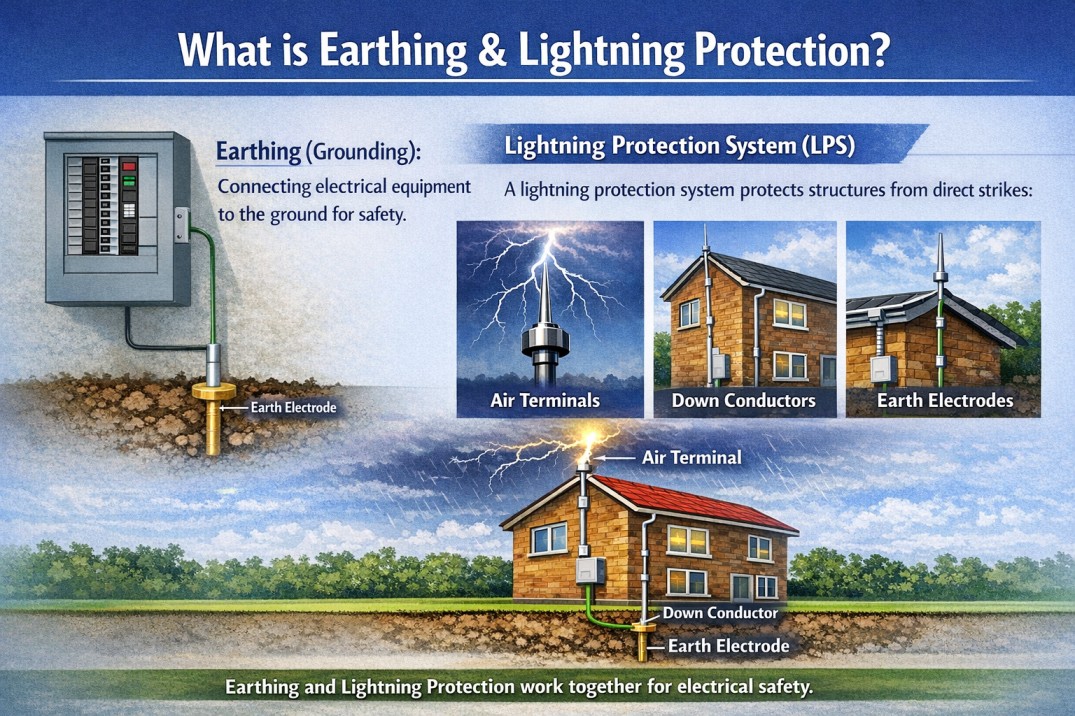
What is Earthing & Lightning Protection?
Earthing (grounding) is the process of connecting electrical equipment to the ground to safely discharge fault currents and prevent electric shock, equipment damage, and fire hazards.
Lightning Protection System (LPS)
A lightning protection system protects structures from direct lightning strikes by safely conducting lightning current to the earth using:
Air terminals (lightning arresters)
Down conductors
Earth electrodes
Together, earthing and lightning protection form a complete electrical safety system.
92%
Happiness Rate
My clients report feeling happier more energized after completing their coaching program. health and wellness.
88%
Success in Habit Formation
Clients successfully adopt and sustain healthy habits over the long term, thanks to tailored strategies and consistent support.
82%
Improved Nutrition Knowledge
Clients leave the program with a deeper understanding of nutrition and how to make better food choices.
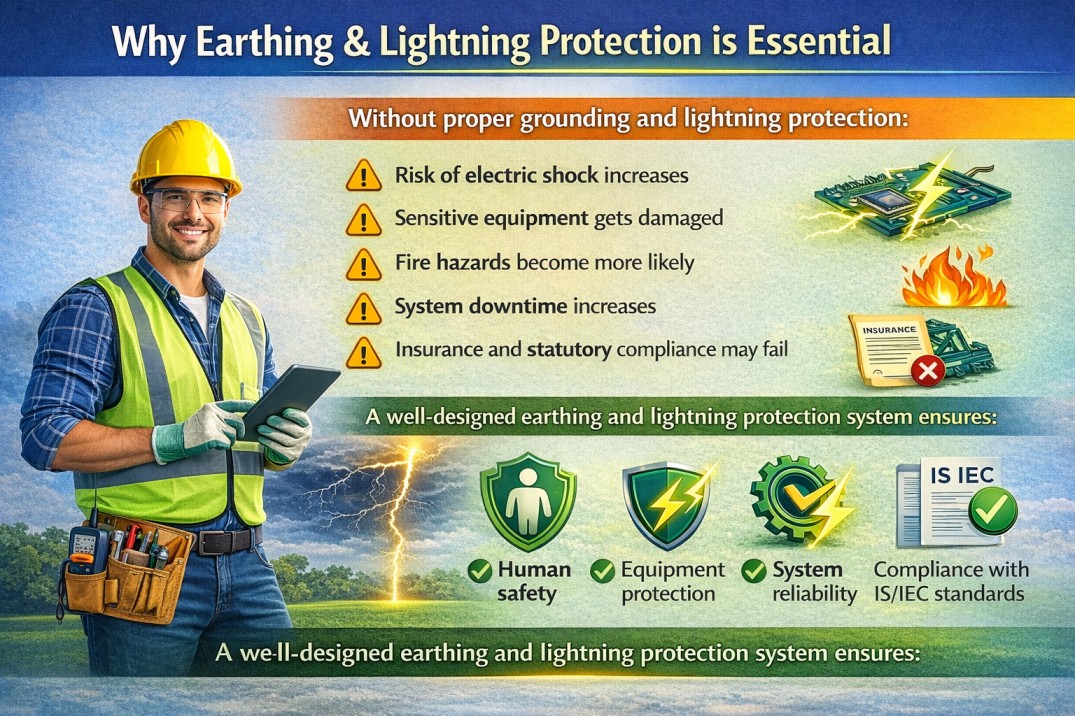
Why Earthing & Lightning Protection is Essential
Without proper grounding and lightning protection:
Risk of electric shock increases
Sensitive equipment gets damaged
Fire hazards become more likely
System downtime increases
Insurance and statutory compliance may fail
A well-designed earthing and lightning protection system ensures:
Human safety
Equipment protection
System reliability
Compliance with IS/IEC standards
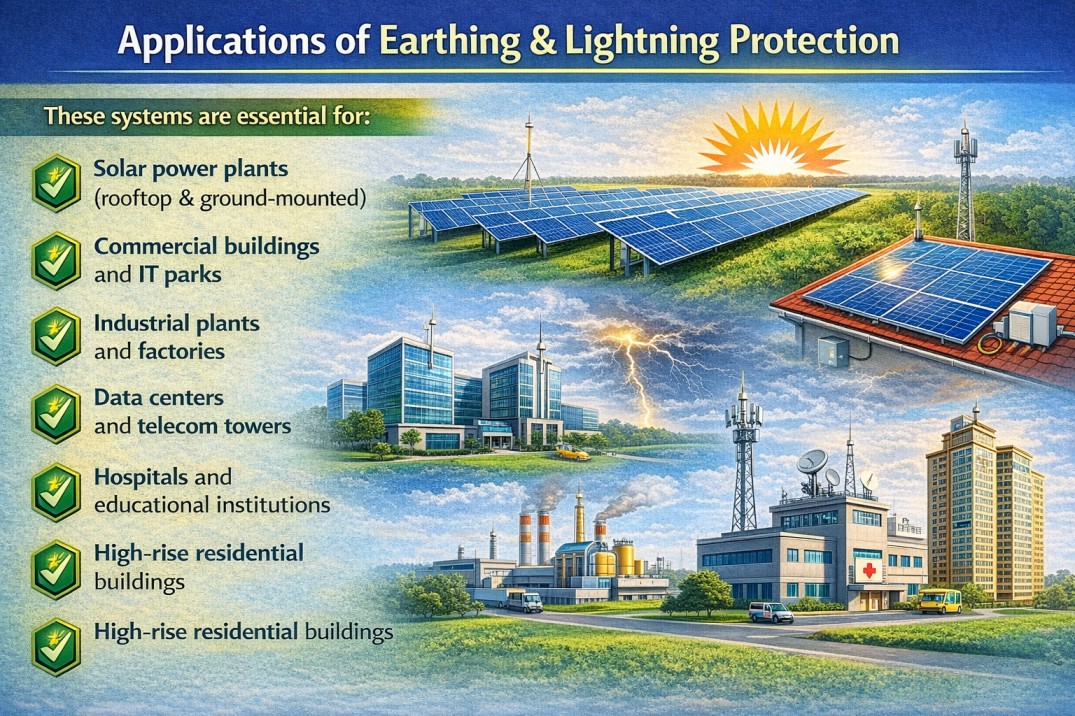
Applications of Earthing & Lightning Protection
These systems are essential for:
Solar power plants (rooftop & ground mounted)
Commercial buildings and IT parks
Industrial plants and factories
Data centers and telecom towers
Hospitals and educational institutions
High-rise residential buildings
Applications of earthing and lightning protection in solar plants, industrial facilities, commercial buildings, and residential systems
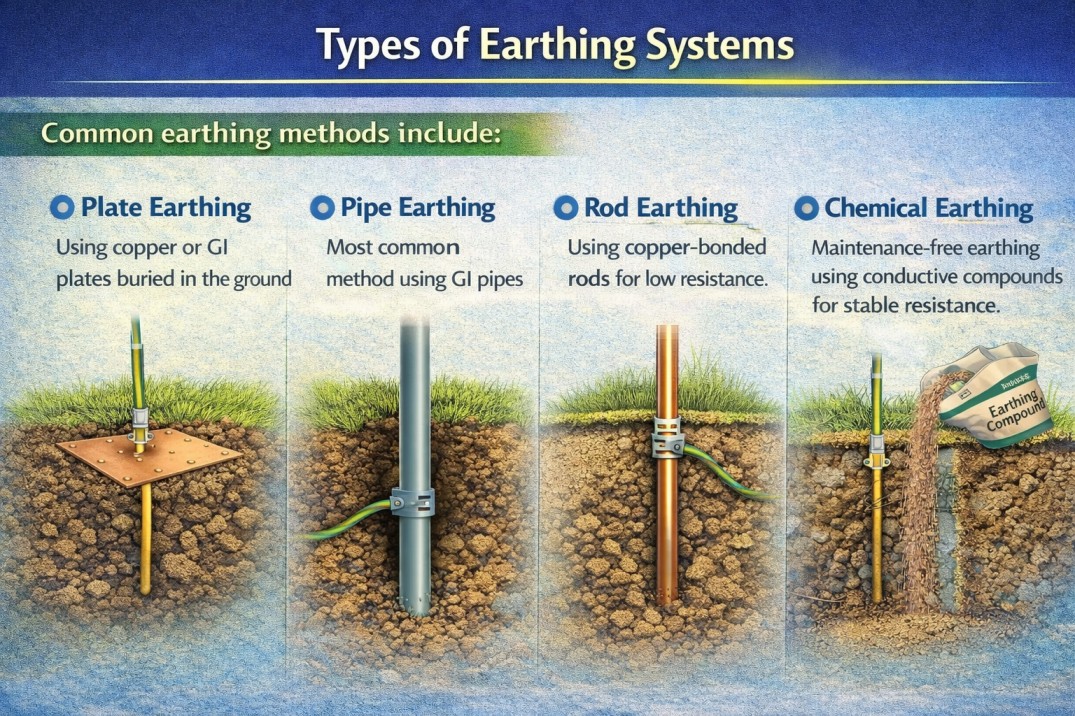
Types of Earthing Systems
Common earthing methods include:
🔹 Plate Earthing
Using copper or GI plates buried in the ground.
🔹 Pipe Earthing
Most common method using GI pipes.
🔹 Rod Earthing
Using copper-bonded rods for low resistance.
🔹 Chemical Earthing
Maintenance-free earthing using conductive compounds for stable resistance.
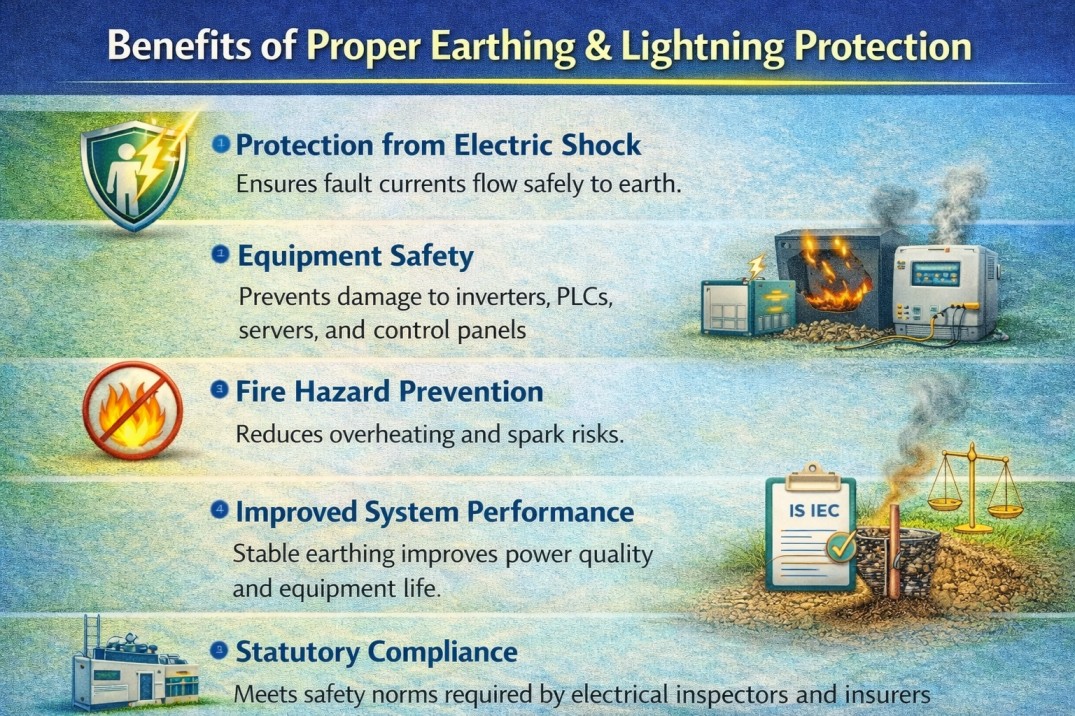
Benefits of Proper Earthing & Lightning Protection
1. Protection from Electric Shock
Ensures fault currents flow safely to earth.
2. Equipment Safety
Prevents damage to inverters, PLCs, servers, and control panels.
3. Fire Hazard Prevention
Reduces overheating and spark risks.
4. Improved System Performance
Stable earthing improves power quality and equipment life.
5. Statutory Compliance
Meets safety norms required by electrical inspectors and insurers.
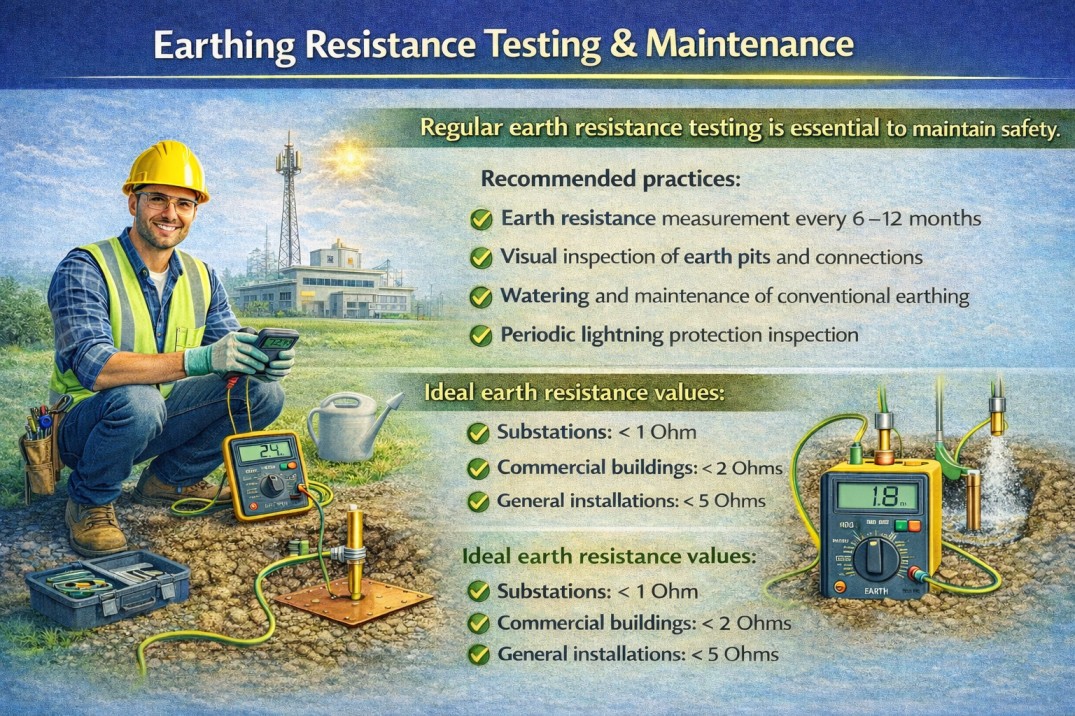
Earthing Resistance Testing & Maintenance
Regular earth resistance testing is essential to maintain safety.
Recommended practices:
Earth resistance measurement every 6–12 months
Visual inspection of earth pits and connections
Watering and maintenance of conventional earthing
Periodic lightning protection inspection
Ideal earth resistance values:
Substations: < 1 Ohm
Commercial buildings: < 2 Ohms
General installations: < 5 Ohms
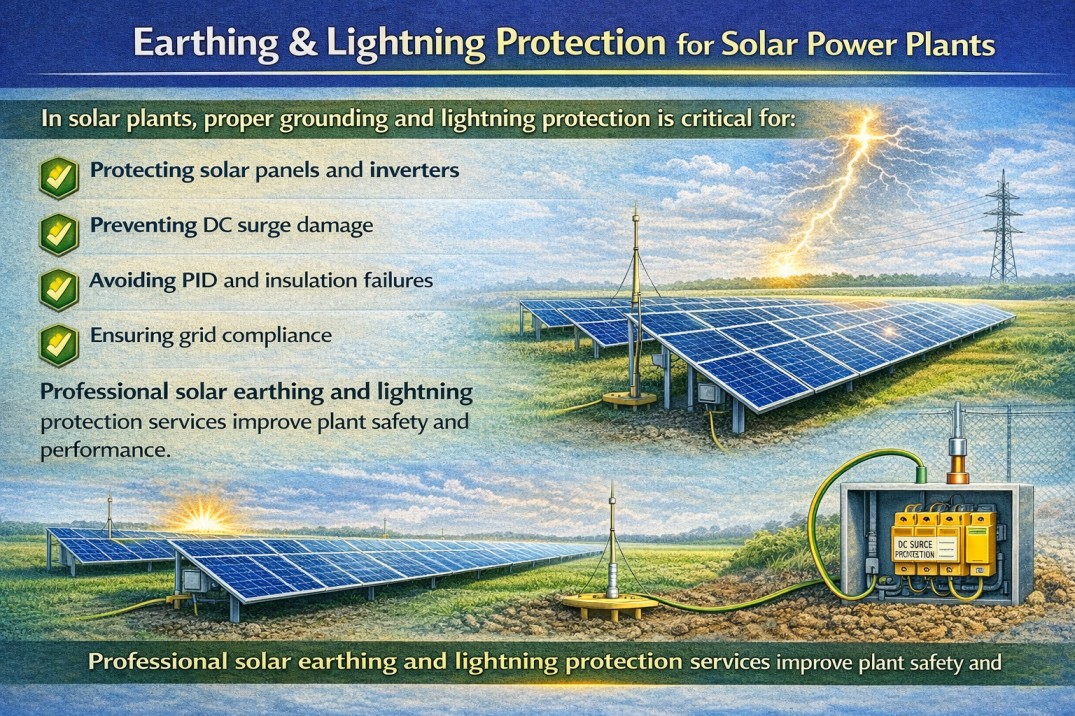
Earthing & Lightning Protection for Solar Power Plants
In solar plants, proper grounding and lightning protection is critical for:
Protecting solar panels and inverters
Preventing DC surge damage
Avoiding PID and insulation failures
Ensuring grid compliance
Professional solar earthing and lightning protection services improve plant safety and performance.
Conclusion
A reliable earthing and lightning protection system is not optional — it is a critical safety requirement for every electrical installation. Proper design, installation, and regular testing ensure long-term safety, equipment protection, and uninterrupted operation.
Invest in professional earthing and lightning protection to safeguard your assets and people.